
Home › Massachusetts › Burlington
Septic Pumping, Inspections and Repair in Burlington, MA
Burlington has been under a MassDEP consent order on its sewer since 2001, so moving a septic home onto the sewer means buying flow under the town sewer allocation policy. Call (978) 486-7980 or use the form. A person reads every request and replies with what happens next.
- Free for homeowners
- Town and state septic rules on this page
- Vine Brook to Mill Pond
Ask About Septic Service in Your Area
Tell us about the system and what is going on. A person reads it and replies with what happens next.
Please add your name, a 10-digit phone number and a valid email.
Your request didn't go through on our end. Please call (978) 486-7980 so it isn't lost.
Too many requests have come from this connection in a short time. Please call (978) 486-7980 and we'll take it from there.
We couldn't finish the spam check. Wait a moment and send it again, or call (978) 486-7980.
Septic in Burlington
What does the system need?
Pumping & Maintenance
Routine tank pumping, filter cleaning and the records your board of health or town may ask for.

Septic Inspections
Title 5 inspections before a Massachusetts sale, and system evaluations for New Hampshire buyers and owners.
Repair & Leach Field Replacement
Broken baffles, failed pumps, backups and leach fields that no longer take water, permitted the way your town requires.
New System Design & Installation
A licensed designer or engineer draws the plan, the town or state approves it, and a permitted installer builds it.
Repair or convert?
(978) 486-7980Tell us what the system is doing and how long you've owned the house, and we'll help you weigh the septic and sewer paths.
Permits
Septic permits and rules in Burlington
Burlington's septic page is short: it advises an inspection about every 3 years and pumping usually every 3 to 5 years, warns that leaking systems can significantly impair water quality, and sends permit applications to the town's OpenGov portal, with Town Hall at 781-270-1600 (Septic System). The town's bylaws and regulations page lists no Board of Health septic regulations, and we found no septic fees posted (Bylaws, Regulations & Policies).
- Permits
- OpenGov portal; Town Hall 781-270-1600
- Sewer status
- MassDEP consent order since July 25, 2001, with a connection moratorium
- Sewer allocation
- $2.50 per gallon with 5:1 infiltration and inflow removal (as posted November 2026)
- Septic-to-sewer, 55+ and 10+ years
- Flat $1,000 for an existing single-family home
- Bedroom additions
- $500 per bedroom
- Wetland setbacks
- 20-foot no-disturb for utilities; 40-foot building setback on existing lots
State rules. Title 5 does the heavy lifting here. A sale needs an inspection within two years before closing, or three if the system was pumped every year with records, by a MassDEP-approved System Inspector from the NEIWPCC list; adding a bedroom or changing the footprint can trigger one too (MassDEP buying or selling guide). Repairs need a design by a Registered Sanitarian or Massachusetts-registered engineer, a Disposal System Construction Permit and a Certificate of Compliance, and perc tests are done in the presence of the board (310 CMR 15.000). The local board approves design and installation and is where you find a licensed septage hauler (MassDEP consumer tips). Digging needs a Dig Safe call at least 72 hours ahead, not counting weekends and holidays.
Last verified November 2026. Fees, restrictions and deadlines on this page are due for re-checking by March 2027. New England Septic Pros is a referral service. We don't pump, inspect or connect anything; the contractor files the permits.
Sewer or septic
Sewer or septic in Burlington
A moratorium since 2001. Burlington has been under MassDEP Administrative Consent Order ACO-NE-01-1004, dated July 25, 2001, which established a moratorium on new sewer connections (Inflow and Infiltration). The allocation page, which carries no newer date, says flow currently costs $2.50 per gallon with 5:1 infiltration and inflow removal; requests of 1,000 gallons per day or more may buy at most half and must mitigate the rest; bedroom additions cost $500 per bedroom; and an existing single-family home converting from private septic pays a flat $1,000 if the owner has lived there 10 or more years and is 55 or older (Sewer Allocation).
Why the limits. The 2019 Open Space and Recreation Plan gives the system a 9.2 mgd capacity against about 3.76 mgd on an average day, says the Winchester portion of the line still has less capacity than needed, and says the consent order requires rehabilitation, five parts of infiltration and inflow removed for every new gallon, whenever more sewage is proposed. It also says part of the residential Zone II and watershed area is on private septic and the rest on municipal sewer (2019 OSRP). The town publishes no sewered share and we found no sewer extension project.
Sump pumps. The town's Sump Pump Amnesty Program pays to redirect sump pumps from the sewer to the storm system at no charge, part of the same effort to free up capacity (Inflow and Infiltration).
Water
Water Burlington protects
The town's own wells. The 2019 open space plan counted seven town wells and the Mill Pond Reservoir; the town places the Vine Brook well fields in the Shawsheen watershed and Mill Pond in the Ipswich watershed (Burlington Water Supply). The 2019 open space plan records wells 3, 4, 5 and 7 shut down in 1978 for contamination, and three Vine Brook wells taken offline in 2013 after 1,4-dioxane was detected. It says about 80% of the Zone II and combined watersheds is residential and lists septic systems with household hazardous materials, heating oil and stormwater as contamination sources (2019 OSRP). Lexington's open space plan likewise notes that the Vine Brook watershed provides drinking water for Burlington (Lexington 2024 OSRP).
Zoning districts. Aquifer and Water Resources districts restrict certain land uses and limit impervious cover; ask the town how they apply to a septic replacement on your lot.
Wetlands. The Wetlands Bylaw sets a 100-foot buffer and a 200-foot riverfront area on perennial or intermittent regulatory streams (Wetlands Bylaw). Its regulations, amended March 14, 2024 and effective April 1, 2024, add a 50-foot inner buffer and presume a 20-foot no-disturb zone and 40-foot building setback on existing residential lots, a 20-foot no-disturb zone for driveways and utilities, and on-site infiltration of runoff from new impervious area in the buffer (Wetlands Bylaw Regulations). A leach field near Vine Brook or a stream starts with the Conservation Commission.
Burlington's homes
Route 128 subdivisions on half-acre lots
The 2019 open space plan describes Burlington as mostly single-family detached homes on half-acre (20,000 square foot) zoning, built as Route 128 turned farmland into subdivisions (2019 OSRP). A 2022 housing needs assessment counts 65% of homes as detached single-family (Housing Needs Assessment).
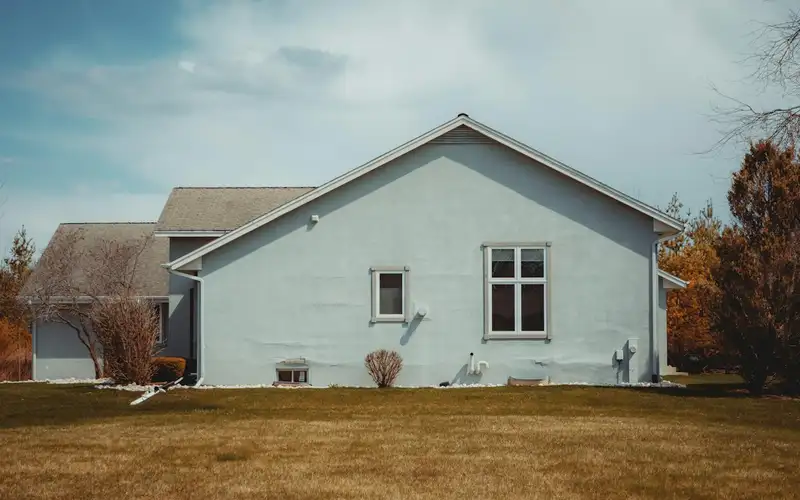
The town doesn't publish how many of those homes are still on septic. For the ones that are, a failing system is a choice between a Title 5 repair and buying into the sewer, and owners who are 55 or older with 10 or more years in the house have the $1,000 conversion to weigh.
Paying for it
Help with septic and sewer costs in Burlington
The town's conversion rate. The only septic-related cost break we found in Burlington is the flat $1,000 sewer allocation for an existing single-family home converting from septic, for owners 55 or older who have lived there 10 or more years (Sewer Allocation). We found no town septic loan or betterment program.
State tax credit. Massachusetts gives owners of a principal residence a credit of 60% of qualifying design and construction costs to repair, replace or upgrade a cesspool or septic system, or connect to sewer when required by Title 5 or a watershed permit. Costs count up to $30,000, the credit can't exceed $4,000 in any tax year, unused credit carries forward up to the next 5 tax years, and the total is capped at $18,000 (M.G.L. c.62 §6(i); DOR).
MassHousing. MassHousing's Septic Repair Loan Program offers low- and no-interest loans of up to $25,000 to owner-occupants of 1–4 family homes and condos, with income limits of $69,500 for deferred and $139,000 for amortized loans, through participating lenders listed on its page. The page doesn't state rates, term or whether applications are open, so check with a lender (MassHousing septic loans).
FAQ
Burlington septic questions
Can a Burlington septic home connect to the sewer?
Yes, by buying sewer allocation. The town has been under a MassDEP Administrative Consent Order since July 25, 2001 that set a moratorium on new connections; as posted in November 2026, flow costs $2.50 per gallon, and the allocation page lists a 5:1 infiltration and inflow removal ratio.
What is the $1,000 septic-to-sewer conversion?
The allocation page says an existing single-family home converting from private septic pays a flat $1,000 if the owner has lived there 10 or more years and is 55 or older. Everyone else follows the regular allocation policy.
Why does septic matter near Burlington's wells?
The 2019 Open Space and Recreation Plan says about 80% of the Zone II and combined watersheds is residential, partly on private septic, and lists septic systems among the contamination sources for the town's wells.
How often does Burlington suggest pumping?
The town's septic page says to have a system inspected about every 3 years and pumped usually every 3 to 5 years. MassDEP's own advice is to pump at least once every three years, and every year with a garbage disposal.
What does it cost me to use New England Septic Pros?
Nothing. Asking is free for homeowners; the contractor prices the job, and the price and contract are between you and them.
Nearby